
This research aims to identify the optimal machining parameters for turning Aluminium Alloy 075-T651 using a tungsten carbide insert cutting tool and a flood coolant system, applying the Grey-based Taguchi method. Aluminium Alloy 075-T651 is commonly utilized in the automotive, marine, machine tools, and aerospace industries due to its excellent weight-to-strength ratio. A key focus of the study are the surface roughness and material removal rate, which is critical in machining. The research explores how various turning parameters affect surface roughness and material removal rate with investigates the role of coolant in these operations. Heat generated during machining can adversely affect tool life, workpiece dimensions, and surface quality. To address these challenges, an environmentally friendly, biodegradable, and non-toxic avocado oil-based cutting fluid was employed. An orthogonal array from the Taguchi method guided the experiments, with surface roughness and material removal rate measured as a response. Minitab software facilitated the statistical analysis of process parameters. Key performance metrics included material removal rate, and surface roughness, influenced by cutting speed, feed rate, depth of cut, and avocado oil proportion. So, an avocado oil (9%), depth of cut (1.0 mm), cutting speed (1000 rpm), and feed rate (85 mm/min) are an optimized parameter.
| Published in | International Journal of Mechanical Engineering and Applications (Volume 14, Issue 5) |
| DOI | 10.11648/j.ijmea.20261405.12 |
| Page(s) | 97-113 |
| Creative Commons |
This is an Open Access article, distributed under the terms of the Creative Commons Attribution 4.0 International License (http://creativecommons.org/licenses/by/4.0/), which permits unrestricted use, distribution and reproduction in any medium or format, provided the original work is properly cited. |
| Copyright |
Copyright © The Author(s), 2026. Published by Science Publishing Group |
ANOVA, Taguchi Method, Turning Operation, Spindle Speed, Surface Roughness
S.No | Device Name | Purpose of usage |
|---|---|---|
1 | CNC Lathe | Used to execute precision rotational machining (turning operations) |
2 | Sono-Bright Ultrasonic Homogenizer | Utilized to emulsify avocado oil with water |
3 | Round-Bottom Reaction Flask | Employed to hold the oil-water and distilled water solution |
4 | Handheld Angle Grinder | Used for surface grinding |
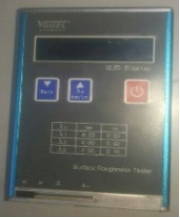
5 | Surface roughness tester | Employed to quantify surface texture and roughness parameters |
Machining parameters | Levels | ||||
|---|---|---|---|---|---|
Input parameter | Unit | Level 1 | Level 2 | Level 3 | Level 4 |
Cutting speed | rpm | 900 | 1000 | 1100 | 1200 |
Feed rate | mm/min | 85 | 90 | 95 | 100 |
Depth of cut | mm | 0.5 | 1 | 1.5 | 2 |
Avocado oil fluids | % | 0 | 3 | 6 | 9 |
S/N | Fluid: AO | Exp.No | Input parameters | Output parameters | |||
|---|---|---|---|---|---|---|---|
Cutting speed | Feed rate | Depth of cut | Ra (μm) | MRR (g/sec) | |||
1 | 0% AO with 100% DW | Exp.1 | 900 | 85 | 0.1 | 2.10 | 0.1325 |
Exp.2 | 900 | 90 | 1 | 2.40 | 0.1250 | ||
Exp.3 | 900 | 95 | 1.5 | 0.30 | 0.3125 | ||
Exp.4 | 900 | 100 | 2 | 2.20 | 0.3000 | ||
2 | 3% AO with 97% DW | Exp.5 | 1000 | 85 | 1 | 2.20 | 0.3280 |
Exp.6 | 1000 | 90 | 0.1 | 2.90 | 0.2550 | ||
Exp.7 | 1000 | 95 | 2 | 2.30 | 0.2120 | ||
Exp.8 | 1000 | 100 | 1.5 | 2.70 | 0.2040 | ||
3 | 6% AO with 94% DW | Exp.9 | 1100 | 85 | 1.5 | 1.30 | 0.3800 |
Exp.10 | 1100 | 90 | 2 | 0.70 | 0.3600 | ||
Exp.11 | 1100 | 95 | 0.1 | 0.10 | 0.2430 | ||
Exp.12 | 1100 | 100 | 1 | 2.40 | 0.1730 | ||
4 | 9% AO with 91% DW | Exp.13 | 1200 | 85 | 2 | 0.20 | 0.3750 |
Exp.14 | 1200 | 90 | 1.5 | 2.20 | 0.2040 | ||
Exp.15 | 1200 | 95 | 1 | 1.14 | 0.3830 | ||
Exp.16 | 1200 | 100 | 0.1 | 0.30 | 0.3760 | ||
Source | DF | Adj SS | Adj MS | F-Value | P-Value | %C | Hypothesis |
|---|---|---|---|---|---|---|---|
Cutting speed | 3 | 6.0518 | 2.01727 | 47.35 | 0.005 | 41.16 | Significant |
Feed rate | 3 | 2.8968 | 0.96560 | 22.67 | 0.015 | 19.7 | Significant |
Depth of cut | 3 | 1.2578 | 0.41927 | 9.84 | 0.046 | 8.56 | Significant |
Avocado oil | 3 | 4.3658 | 1.45527 | 34.16 | 0.008 | 29.69 | Significant |
Error | 3 | 0.1278 | 0.04260 | 0.86 | |||
Total | 15 | 14.7000 |
Source | DF | Adj SS | Adj MS | F-Value | P-Value | %C | Hypothesis |
|---|---|---|---|---|---|---|---|
Cutting speed | 3 | 0.030635 | 0.010212 | 123.50 | 0.001 | 24.79 | Significant |
Feed rate | 3 | 0.010523 | 0.003508 | 42.42 | 0.006 | 8.51 | Significant |
Depth of cut | 3 | 0.009573 | 0.003191 | 38.59 | 0.007 | 7.74 | Significant |
Avocado oil | 3 | 0.072576 | 0.024192 | 292.57 | 0.000 | 58.73 | Significant |
Error | 3 | 0.000248 | 0.000083 | 0.2 | |||
Total | 15 | 0.123555 |
Factors | A | B | C | D | Response | |
|---|---|---|---|---|---|---|
Exp.No | Column | |||||
Cutting speed | Feed rate | Depth of cut | Avocado oil | Ra (μm) | MRR (g/sec) | |
1 | 900 | 85 | 0.5 | 0 | 2.1 | 0.1325 |
2 | 900 | 90 | 1 | 3 | 2.4 | 0.125 |
3 | 900 | 95 | 1.5 | 6 | 0.3 | 0.3125 |
4 | 900 | 100 | 2 | 9 | 2.2 | 0.3 |
5 | 1000 | 85 | 1 | 6 | 2.2 | 0.328 |
6 | 1000 | 90 | 0.5 | 9 | 2.9 | 0.255 |
7 | 1000 | 95 | 2 | 0 | 2.3 | 0.212 |
8 | 1000 | 100 | 1.5 | 3 | 2.7 | 0.204 |
9 | 1100 | 85 | 1.5 | 9 | 1.3 | 0.38 |
10 | 1100 | 90 | 2 | 6 | 0.7 | 0.36 |
11 | 1100 | 95 | 0.5 | 3 | 0.1 | 0.243 |
12 | 1100 | 100 | 1 | 0 | 2.4 | 0.173 |
13 | 1200 | 85 | 2 | 3 | 0.2 | 0.375 |
14 | 1200 | 90 | 1.5 | 0 | 2.2 | 0.204 |
15 | 1200 | 95 | 1 | 9 | 1.14 | 0.383 |
16 | 1200 | 100 | 0.5 | 6 | 0.3 | 0.376 |
Maximum | 2.9 | 0.383 | ||||
Minimum | 0.1 | 0.125 | ||||
Maximum-Minimum | 2.8 | 0.258 | ||||
Factors | Response | |
|---|---|---|
Exp. No | Ra (μm) | MRR(g/sec) |
1 | 0.714285714 | 0.029069767 |
2 | 0.821428571 | 0 |
3 | 0.071428571 | 0.726744186 |
4 | 0.75 | 0.678294574 |
5 | 0.75 | 0.786821705 |
6 | 1 | 0.503875969 |
7 | 0.785714286 | 0.337209302 |
8 | 0.928571429 | 0.30620155 |
9 | 0.428571429 | 0.988372093 |
10 | 0.214285714 | 0.910852713 |
11 | 0 | 0.457364341 |
12 | 0.821428571 | 0.186046512 |
13 | 0.035714286 | 0.968992248 |
14 | 0.75 | 0.30620155 |
15 | 0.371428571 | 1 |
16 | 0.071428571 | 0.972868217 |
Factors | Response | |
|---|---|---|
Exp.No | ||
Ra (μm) | MRR(g/sec) | |
1 | 0.285714286 | 0.970930233 |
2 | 0.178571429 | 1 |
3 | 0.928571429 | 0.273255814 |
4 | 0.25 | 0.321705426 |
5 | 0.25 | 0.213178295 |
6 | 0 | 0.496124031 |
7 | 0.214285714 | 0.662790698 |
8 | 0.071428571 | 0.69379845 |
9 | 0.571428571 | 0.011627907 |
10 | 0.785714286 | 0.089147287 |
11 | 1 | 0.542635659 |
12 | 0.178571429 | 0.813953488 |
13 | 0.964285714 | 0.031007752 |
14 | 0.25 | 0.69379845 |
15 | 0.628571429 | 0 |
16 | 0.928571429 | 0.027131783 |
| 0 | 0 |
| 1 | 1 |
Factors | Response | Total of GRC | Grey relational grade | Grey relational rank | |
|---|---|---|---|---|---|
Exp.No | Ra (μm) | MRR(g/sec) | |||
1 | 0.636363636 | 0.339920949 | 0.976285 | 0.488142 | 15 |
2 | 0.736842105 | 0.333333333 | 1.070175 | 0.535088 | 13 |
3 | 0.35 | 0.646616541 | 0.996617 | 0.498308 | 14 |
4 | 0.666666667 | 0.608490566 | 1.275157 | 0.637579 | 8 |
5 | 0.666666667 | 0.701086956 | 1.367754 | 0.683877 | 4 |
6 | 1 | 0.501945525 | 1.501946 | 0.750973 | 1 |
7 | 0.7 | 0.43 | 1.13 | 0.565 | 10 |
8 | 0.875000001 | 0.418831169 | 1.293831 | 0.646916 | 6 |
9 | 0.466666667 | 0.977272727 | 1.443939 | 0.72197 | 2 |
10 | 0.388888889 | 0.84868421 | 1.237573 | 0.618787 | 9 |
11 | 0.333333333 | 0.479553903 | 0.812887 | 0.406444 | 16 |
12 | 0.736842105 | 0.380530974 | 1.117373 | 0.558687 | 11 |
13 | 0.341463415 | 0.941605839 | 1.283069 | 0.641535 | 7 |
14 | 0.666666667 | 0.418831169 | 1.085498 | 0.542749 | 12 |
15 | 0.443037975 | 1 | 1.443038 | 0.721519 | 3 |
16 | 0.35 | 0.948529412 | 1.298529 | 0.649265 | 5 |
Factors | A | B | C | D | Grey relational grade |
|---|---|---|---|---|---|
Exp.No | Column | ||||
1 | 2 | 3 | 4 | ||
1 | 1 | 1 | 1 | 1 | 0.488142 |
2 | 1 | 2 | 2 | 2 | 0.535088 |
3 | 1 | 3 | 3 | 3 | 0.498308 |
4 | 1 | 4 | 4 | 4 | 0.637579 |
5 | 2 | 1 | 2 | 3 | 0.683877 |
6 | 2 | 2 | 1 | 4 | 0.750973 |
7 | 2 | 3 | 4 | 1 | 0.565 |
8 | 2 | 4 | 3 | 2 | 0.646916 |
9 | 3 | 1 | 3 | 4 | 0.72197 |
10 | 3 | 2 | 4 | 3 | 0.618787 |
11 | 3 | 3 | 1 | 2 | 0.406444 |
12 | 3 | 4 | 2 | 1 | 0.558687 |
13 | 4 | 1 | 4 | 2 | 0.641535 |
14 | 4 | 2 | 3 | 1 | 0.542749 |
15 | 4 | 3 | 2 | 4 | 0.721519 |
16 | 4 | 4 | 1 | 3 | 0.649265 |
Level | Input parameters | |||
|---|---|---|---|---|
Cutting speed | Feed rate | Depth of cut | Avocado oil | |
Level 1 | 0.53977925 | 0.633881 | 0.573706 | 0.5386445 |
Level 2 | 0.6616915 | 0.61189925 | 0.62479275 | 0.55749575 |
Level 3 | 0.576472 | 0.54781775 | 0.60248575 | 0.61255925 |
Level 4 | 0.638767 | 0.62311175 | 0.61572525 | 0.70801025 |
Max-Min | 0.12191225 | 0.08606325 | 0.05108675 | 0.16936575 |
Rank | 2 | 3 | 4 | 1 |
S/N | Response | Calculated value | Experimental value | Percentage Error (%) |
|---|---|---|---|---|
1 | Surface roughness (μm) | 0.095 | 0.1 | 5 |
2 | Material removal rate(g/sec) | 0.365 | 0.3830 | 4.699 |
ANOVA | Analysis of Variance |
Adj MS | Adjusted Mean Square |
Adj SS | Adjusted Sum of Square |
Al | Aluminium |
AO | Avocado Oil |
CS | Cutting speed |
DoE | Design of Experiments |
DC | Depth of cut |
DW | Distilled water |
FR | Feed Rate |
GRA | Grey Relational Analysis |
GRG | Grey Relational Grade |
MRR | Metal Removal Rate |
OA | Orthogonal Array |
Ra | Surface Roughness |
R-sq | R Square |
R-sq(Adj) | Adjusted R Square |
R-sq(Pred) | Predicted R Square |
S/N | Signal-to-Noise Ratio |
| Coefficient of Determination |
| [1] | P. C. Priarone, M. Robiglio, L. Settineri, and V. Tebaldo, “Effectiveness of minimizing cutting fluid use when turning difficult-to-cut alloys,” Procedia CIRP, vol. 29, pp. 341–346, 2015, |
| [2] | A. J. B. Sutton and D. J. Sapsford, “Physicochemical Characterization of Sludge Originating from Vegetable Oil – Based Cutting Fluids,” pp. 1–8, 2012, |
| [3] | C. H. Yu, R. L. Peng, T. L. Lee, V. Luzin, J. E. Lundgren, and J. Moverare, “Anisotropic behaviours of LPBF Hastelloy X under slow strain rate tensile testing at elevated temperature,” Mater. Sci. Eng. A, vol. 844, no. January, p. 143174, 2022, |
| [4] | T. Stapenhurst and A. Bendell, Taguchi Methods, vol. 41, no. 9. 1990. |
| [5] | D. K. Patel and R. G. Jivani, “Experimental Investigations on Material Removal Rate, Power Consumption and Surface Roughness of EN19 Steels in Turing using Taguchi Method - A Review,” vol. 3, no. 2, pp. 2648–2651, 2014. |
| [6] | V. Saikumar, V. Venkatesh, and P. Sivaiah, “Multi-Objective Optimization in CNC Milling Process of Al-Cu-Zn Alloy Matrix Composite by Using Taguchi-Grey Relational Analysis Technique,” Int. J. Adv. Mater. Manuf. Charact., vol. 5, no. 1, pp. 661–672, 2015, |
| [7] | K. Krishnaiah and P. Shahabudeen, Applied Experimental Design and Taguchi Method. 2012. |
| [8] | S. K. Nayak, J. K. Patro, S. Dewangan, and S. Gangopadhyay, “Multi-objective Optimization of Machining Parameters During Dry Turning of AISI 304 Austenitic Stainless Steel Using Grey Relational Analysis,” Procedia Mater. Sci., vol. 6, no. Icmpc, pp. 701–708, 2014, |
| [9] | Pramanik, A., & Littlefair, G. (2015). Machining of titanium alloy (Ti-6Al-4V)-theory to application. Machining Science and Technology, 19(1), 1–49. |
| [10] | Priarone, P. C., Robiglio, M., Settineri, L., & Tebaldo, V. (2015). Effectiveness of minimizing cutting fluid use when turning difficult-to-cut alloys. Procedia CIRP, 29, 341–346. |
| [11] | Sachin, C. (2018). Experimental Study in Micromilling of Inconel 718 by Fiber Laser Machining Experimental Study in Micromilling of Inconel 718 by Fiber Laser Costing models for capacity optimization in Industry 4. 0 : Trade-off be. Procedia Manufacturing, 20, 213–218. |
| [12] | Saikumar, V., Venkatesh, V., & Sivaiah, P. (2015). Multi-Objective Optimization in CNC Milling Process of Al-Cu-Zn Alloy Matrix Composite by Using Taguchi-Grey Relational Analysis Technique. International Journal of Advanced Materials Manufacturing and Characterization, 5(1), 661–672. |
| [13] | Santhosh, K., Manikandan, G., & M, M. K. (2016). Replacement of Base Oil into the Vegetable Neem Oil Based Metal Working Fluid in Machining Application of Ferrous Metals. 11617–11632. |
| [14] | Soni, P. K., Suresh, P., & Badholiya, K. (2022). “ A Experimental Analysis Of Minimum Quantity Lubrication By Sunflower oil and Neem Oil as cutting fluid.” 4(7), 1569–1583. |
| [15] | Stapenhurst, T., & Bendell, A. (1990). Taguchi Methods. In The Journal of the Operational Research Society (Vol. 41, Issue 9). |
| [16] | Venkatesh, C., Gelaw, M., & Dufera, S. (2020). Optimization of Bio Degradable Nano Cutting Fluid Parameters during Machining of Titanium Alloy. 3878(6), 2378–2384. |
| [17] | Yu, C. H., Peng, R. L., Lee, T. L., Luzin, V., Lundgren, J. E., & Moverare, J. (2022). Anisotropic behaviours of LPBF Hastelloy X under slow strain rate tensile testing at elevated temperature. Materials Science and Engineering: A, 844(January), 143174. |
APA Style
Anebo, A. A., Hailegirogis, T., Gebeyehu, W., Toma, B. B. (2026). Experimental Exploration into Al 7075-T651 Machinability, Surface Quality, and MRR Using Avocado Cutting Fluid via Grey Optimization. International Journal of Mechanical Engineering and Applications, 14(5), 97-113. https://doi.org/10.11648/j.ijmea.20261405.12
ACS Style
Anebo, A. A.; Hailegirogis, T.; Gebeyehu, W.; Toma, B. B. Experimental Exploration into Al 7075-T651 Machinability, Surface Quality, and MRR Using Avocado Cutting Fluid via Grey Optimization. Int. J. Mech. Eng. Appl. 2026, 14(5), 97-113. doi: 10.11648/j.ijmea.20261405.12
@article{10.11648/j.ijmea.20261405.12,
  author = {Abera Ayza Anebo and Temesgen Hailegirogis and Workineh Gebeyehu and Biniyam Bekele Toma},
  title = {Experimental Exploration into Al 7075-T651 Machinability, Surface Quality, and MRR Using Avocado Cutting Fluid via Grey Optimization},
  journal = {International Journal of Mechanical Engineering and Applications},
  volume = {14},
  number = {5},
  pages = {97-113},
  doi = {10.11648/j.ijmea.20261405.12},
  url = {https://doi.org/10.11648/j.ijmea.20261405.12},
  eprint = {https://article.sciencepublishinggroup.com/pdf/10.11648.j.ijmea.20261405.12},
  abstract = {This research aims to identify the optimal machining parameters for turning Aluminium Alloy 075-T651 using a tungsten carbide insert cutting tool and a flood coolant system, applying the Grey-based Taguchi method. Aluminium Alloy 075-T651 is commonly utilized in the automotive, marine, machine tools, and aerospace industries due to its excellent weight-to-strength ratio. A key focus of the study are the surface roughness and material removal rate, which is critical in machining. The research explores how various turning parameters affect surface roughness and material removal rate with investigates the role of coolant in these operations. Heat generated during machining can adversely affect tool life, workpiece dimensions, and surface quality. To address these challenges, an environmentally friendly, biodegradable, and non-toxic avocado oil-based cutting fluid was employed. An orthogonal array from the Taguchi method guided the experiments, with surface roughness and material removal rate measured as a response. Minitab software facilitated the statistical analysis of process parameters. Key performance metrics included material removal rate, and surface roughness, influenced by cutting speed, feed rate, depth of cut, and avocado oil proportion. So, an avocado oil (9%), depth of cut (1.0 mm), cutting speed (1000 rpm), and feed rate (85 mm/min) are an optimized parameter.},
 year = {2026}
}
TY  - JOUR
T1  - Experimental Exploration into Al 7075-T651 Machinability, Surface Quality, and MRR Using Avocado Cutting Fluid via Grey Optimization
AU  - Abera Ayza Anebo
AU  - Temesgen Hailegirogis
AU  - Workineh Gebeyehu
AU  - Biniyam Bekele Toma
Y1  - 2026/10/21
PY  - 2026
N1  - https://doi.org/10.11648/j.ijmea.20261405.12
DO  - 10.11648/j.ijmea.20261405.12
T2  - International Journal of Mechanical Engineering and Applications
JF  - International Journal of Mechanical Engineering and Applications
JO  - International Journal of Mechanical Engineering and Applications
SP  - 97
EP  - 113
PB  - Science Publishing Group
SN  - 2330-0248
UR  - https://doi.org/10.11648/j.ijmea.20261405.12
AB  - This research aims to identify the optimal machining parameters for turning Aluminium Alloy 075-T651 using a tungsten carbide insert cutting tool and a flood coolant system, applying the Grey-based Taguchi method. Aluminium Alloy 075-T651 is commonly utilized in the automotive, marine, machine tools, and aerospace industries due to its excellent weight-to-strength ratio. A key focus of the study are the surface roughness and material removal rate, which is critical in machining. The research explores how various turning parameters affect surface roughness and material removal rate with investigates the role of coolant in these operations. Heat generated during machining can adversely affect tool life, workpiece dimensions, and surface quality. To address these challenges, an environmentally friendly, biodegradable, and non-toxic avocado oil-based cutting fluid was employed. An orthogonal array from the Taguchi method guided the experiments, with surface roughness and material removal rate measured as a response. Minitab software facilitated the statistical analysis of process parameters. Key performance metrics included material removal rate, and surface roughness, influenced by cutting speed, feed rate, depth of cut, and avocado oil proportion. So, an avocado oil (9%), depth of cut (1.0 mm), cutting speed (1000 rpm), and feed rate (85 mm/min) are an optimized parameter.
VL  - 14
IS  - 5
ER  -
Department of Mechanical Engineering (Specialization Manufacturing Engineering), Wolaita Sodo University, Wolaita Sodo, Ethiopia

Information



 Share This Article
 Twitter
 Linked In
 Facebook

 Copy
 Download