1. Introduction
Maize (
Zea mays L.) is one of the most important cereal crops worldwide, serving as a staple food, livestock feed, and industrial raw material. However, significant post-harvest losses continue to affect maize production systems, particularly in developing countries, where losses of 15-30% have been reported due to inadequate drying and storage practices
| [1] | FAO: Global food losses and food waste. Rome: FAO; 2021. |
[1]
. Grain drying is a critical post-harvest operation, as excessive moisture content promotes microbial growth, insect infestation, and biochemical degradation, ultimately reducing grain quality and market value
| [2] | Brooker DB, Bakker-Arkema FW, Hall CW: Drying and storage of grains and oilseeds. Springer; 2022. |
[2]
. Sun drying remains the most commonly used drying method for maize in rural agro-processing systems because of its low initial cost. Nevertheless, this method is highly dependent on weather conditions, requires large drying areas, and exposes grains to contamination, non-uniform drying, and rewetting, which increases the risk of fungal development and aflatoxin contamination
| [3] | Williams SB, Baributsa D, Woloshuk C: Postharvest losses in maize. Food Control. 2022; 137: 108940. |
| [4] | Hell K, Mutegi C: Aflatoxin control and prevention strategies. World Mycotoxin J. 2021; 14: 233-245. |
[3, 4]
. These limitations highlight the need for controlled mechanical drying solutions that can ensure uniform moisture reduction and improve food safety. Mechanical and oven-based drying systems provide better control of temperature, airflow, and drying time, enabling consistent and hygienic drying conditions
| [5] | Mujumdar AS: Handbook of industrial drying. 5th ed. CRC Press; 2024. |
[5]
. However, many conventional grain dryers are energy-intensive, costly, and unsuitable for small-scale farmers. Recent research has therefore focused on developing low-cost, energy-efficient drying systems with improved airflow management and thermal insulation to reduce operating costs while maintaining drying performance
| [6] | Singh A, Raghavan GSV: Energy-efficient drying systems for grains. Renew Sustain Energy Rev. 2022; 169: 112938. |
[6]
. The drying process of maize is governed by coupled heat and mass transfer mechanisms, where internal moisture diffusion within the kernel and convective mass transfer at the grain surface dominate the drying kinetics
| [7] | Jayas DS: Grain drying fundamentals. Biosyst Eng. 2021; 198: 1-14. |
[7]
. Poor airflow distribution and temperature non-uniformity in drying chambers can result in uneven moisture content, grain stress cracking, and quality deterioration
| [8] | Lawal AO, et al.: Airflow distribution effects in grain dryers. Appl Therm Eng. 2022; 213: 118672. |
[8]
. Optimizing oven design parameters such as fan configuration, insulation, and temperature control is therefore essential for efficient grain drying. This study aims to design, realise, and experimentally evaluate an optimized maize drying oven with improved temperature uniformity, reduced drying time, and enhanced energy efficiency. The proposed system targets small-scale and rural agro-processing applications, offering an affordable and scalable alternative to traditional drying practices. Grain drying involves the removal of moisture through evaporation driven by a temperature and vapor pressure gradient between the grain and the surrounding air. In maize, moisture migration occurs primarily through diffusion from the kernel interior to the surface, followed by convective mass transfer to the drying air
| [7] | Jayas DS: Grain drying fundamentals. Biosyst Eng. 2021; 198: 1-14. |
[7]
. Drying behavior typically exhibits a short constant-rate period and a dominant falling-rate period, indicating that internal moisture diffusion controls the process
| [9] | Zare D: Moisture diffusion characteristics of maize kernels. J Food Eng. 2022; 310: 110673. |
[9]
. Recent studies using multi-component diffusion models have shown that maize kernels exhibit heterogeneous moisture distributions, and simplified single-diffusion models may underestimate drying time and energy consumption
| [10] | Moisture diffusion in maize hot air drying based on multi-component structure. LWT. 2025; 231: 118202. |
[10]
. These findings emphasize the importance of controlled drying conditions to ensure uniform moisture removal.
Several drying techniques have been investigated for maize, including hot air drying, infrared drying, solar drying, and hybrid methods. Hot air drying remains the most widely adopted mechanical method due to its simplicity and reliability
| [11] | Kudra T, Mujumdar AS: Advanced hot air drying. Drying Technol. 2023; 41: 567-582. |
[11]
. However, constant-temperature hot air drying may lead to excessive energy consumption and grain quality degradation if not properly controlled. Two-stage and variable-temperature drying techniques have demonstrated improved drying rates and reduced energy consumption compared to single-stage drying
| [12] | Impacts of two-stage drying techniques on maize quality. J Agric Food Res. 2024; 14: 100678. |
[12]
. Chen et al.
| [13] | Chen PX, et al.: Effects of drying methods on maize quality. Int J Agric Biol Eng. 2024; 17: 275-283. |
[13]
reported that optimized drying temperature profiles significantly improved drying kinetics while maintaining maize quality. Similarly, infrared-assisted and hybrid drying methods have shown promise but often require higher capital investment and complex control systems
| [14] | Onwude DI, et al.: Infrared drying of food materials. Food Eng Rev. 2022; 14: 345-368. |
[14]
. Uniform airflow distribution plays a critical role in achieving consistent drying. Non-uniform airflow leads to localized overheating, uneven moisture content, and reduced dryer efficiency
| [8] | Lawal AO, et al.: Airflow distribution effects in grain dryers. Appl Therm Eng. 2022; 213: 118672. |
[8]
. Experimental and numerical studies using computational fluid dynamics (CFD) have shown that fan placement and chamber geometry strongly influence airflow patterns and temperature distribution inside drying chambers
| [15] | Zhang Y, et al.: CFD analysis of airflow in grain dryers. Biosyst Eng. 2023; 224: 90-103. |
[15]
. Computed tomography and thermal imaging techniques have further revealed stratified moisture and temperature gradients within maize grain beds, reinforcing the need for optimized forced-convection designs
| [16] | Study of heat and mass transfer during maize grain pile drying. Biosyst Eng. 2024; 248: 82-96. |
[16]
. Dual-fan and recirculation configurations have been identified as effective strategies for improving airflow uniformity in compact drying systems
| [17] | Adepoju AO, et al.: Performance of forced-convection dryers. Case Stud Therm Eng. 2023; 44: 102847. |
[17]
. Energy consumption is a major constraint in mechanical grain drying, particularly in regions with limited access to affordable electricity. Energy and exergy analyses of maize dryers indicate that significant energy losses occur due to poor insulation and uncontrolled exhaust air
| [18] | Energy and exergy analysis of corn grain drying. Renew Energy. 2021; 163: 1942-1950. |
[18]
. Improving thermal insulation and optimizing airflow paths can substantially reduce specific energy consumption. Recent studies have also explored the integration of sensors and basic automation to improve drying efficiency and process control without significantly increasing system cost
| [19] | Predictive models for corn drying moisture content. Appl Sci. 2025; 14: 5680. |
[19]
. Such approaches are particularly suitable for small-scale and rural applications where advanced control systems may not be feasible.
Despite extensive research on maize drying, there remains a gap in the development of affordable, compact, and energy-efficient drying ovens tailored to small-scale agro-processing. Many existing systems prioritize performance over cost, limiting adoption in rural settings. This study addresses this gap by designing and realizing a low-cost oven with optimized airflow, insulation, and temperature control, and by experimentally evaluating its drying performance.
2. Materials and Methods
2.1. Design and Simulation
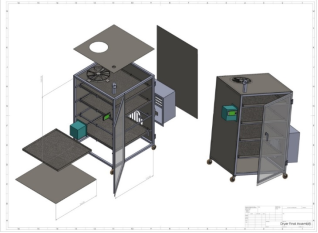
The drying oven was designed in SolidWorks with a focus on thermal distribution and airflow optimization. Key features included a dual-fan circulation system and insulation to minimize energy losses. Airflow CFD simulations were conducted to assess internal temperature uniformity and identify potential zones of poor circulation. Materials were chosen based on thermal performance and durability, with stainless steel for the chamber, high-density insulation panels, and variable speed fans. The prototype oven comprised:
1) Insulated drying chamber with capacity for 7.5 kg maize.
2) Dual fans to enhance forced convection.
3) PID temperature controller interfaced with K-type thermocouples.
4) Data logging system for continuous monitoring.
The
Figure 1 below presents the 3D model of the oven.
Figure 1. 3D modeling of the oven.
2.2. Structured Calculations and Assumptions of the Oven
Based on the selected dimensions of the oven (0.40m x 0.40m x 0.80m), the following assumptions and sample calculations are provided for each key component of the air oven dry design.
1) Length (L): 0.40m
2) Width (W): 0.40m
3) Height (H): 0.80m
2.2.1. Internal Energy of the Chamber
The internal energy
of the chamber is the sum of the work done by the coil W and heat absorbed by the air Q. It is given by the eq (
1)
1) Work done by the coil W =P t = IVt
Where I is the current (A), V voltage (V) and t = time (s)
2) Heat absorbed by the air/ heat input into the system
Where M = mass of air (kg), C = specific heat capacity of air Change in temperature
Where V is the volume and is the density
Therefore; eq (
1) become eq (
2)
2.2.2. Heat Outputs or Used in the Chamber
1) Heat absorbed by the specimen
The heat absorbed by the specimen is the heat absorbed by the material plus the heat required to change state of the water released through vaporization and is given by eq (
3)
Habsorbed= Qsolids+ Qheating liquid+Qvaporisation(3)
Habsorbed =
2) Heat absorbed by the container
Heat absorbed by the steel chamber
is given by eq (
4)
(4)
3) Calculation of heat loss
The major form of heat loss here is by conduction although heat is also lost through convection and radiation. A material with very low thermal conductivity will be best. The heat loss is calculated using the following eq (
5).
(5)
Where Q is the heat loss due to conduction in watts, k is the heat transfer coefficient watts/m
2°C, A is the surface area of the dryer and T
2 - T
1 is the temperature difference between the inside of the dryer and the surrounding, d is the thickness of the insulating material. So a material with more thickness will have minimum heat loss. The thickness of the insulating material depends on the desired thermal resistance value and the thermal conductivity of the material. The thermal resistance R value is obtained using the following eq (
6).
2.2.3. Total Heat Used in the Oven
Internal energy = heat absorbed + heat absorbed by container+ heat loss through insulation. It is expressed in eq (
7)
(7)
Equalizing eq (
2) and eq (
7) and replacing
and
by their expression we can have eq (
8)
++(8)
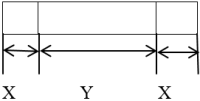
The entire oven design is made up of the internal and external body, which is of mild steel material, both separated with lagging material, and the whole assembly made rigid by a rectangular framework.
Below are various oven sizes;
1) X = thickness of mild steel (millimetres)=1mm
2) Y = thickness of Lagging material (millimetres) =20mm
Therefore;
1) Total thickness (T) = X + Y + X (millimeters)=1+20+1=22mm
2) Length = L - 2(T) =400-2(22)=356mm
3) Width = W - 2(T) =400-2(22)=356mm
4) Height = H - 2(T) =800-2(22)=756mm
5) Internal Area = L x W
6) Internal Volume = L x W x H
7) Determination of the Heat loss through insulation material
Considering the several layers of the system as presented on
Figure 2 below,
Figure 2. Profile of the wall of the dryer.
1) Material X is of same material (steel)
2) Material Y is of fiber glass
3) T1 and T2 are the in and out temperatures of the drying chamber
4) From Newton law of heat transfer by conduction is given by eq (
9),
Where and h is the heat convection coefficient of the material
The heat flow rate across the wall
h of steal = 60w/m2.k
h fiber glass = 0.09w/m2.k
T1 is the external temperature (assumed room temperature= 25)
T2 is the internal temperature (assumed at 55)
a. Grain bed and drying capacity
1) Maize grain density (): /
2) Grain bed depth (): 0.2m
3) Grain bed area ():
4) Grain bed volume ():
5) Maximum grain mass ():
b. Airflow calculations
Assumptions:
1) Initial moisture content (IMC): 25% wet basis
2) Final moisture content (FMC): 14% wet basis
3) Inlet air temperature ():
4) Outlet air temperature ():
5) Drying time (): 4 hours = 14,400s
6) Moisture to be removed ():
Psychrometric properties:
1) Specific humidity at 0.0106kg water/kg dry air.
2) Specific humidity 0.0212kg water/kg dry air
3) Specific volume at
4) Moisture gain by air ():
5) Dry air mass flow rate
kg/s
6) Volumetric air flow rate
/s or 30L/s
c. Heating system calculations
Assumptions:
1) Desired air temperature
2) Inlet air temperature:
3) Specific heat of air
4) Latent heat of vaporisation
5) Heat to raise air temperature
6) Heat required for moisture evaporation ():
d. Total heat required and heater sizing
1) Total heat required ():
2) Heater capacity including losses
Assuming a 15% heat loss:
e. Pressure drop calculations
Pressure loss through the grain bed is estimated using simplified fluid dynamics
Assumptions:
1) Airflow velocity: /s
2) Grain bed thickness:
3) Grain diameter:
4) Air density:
5) Air dynamic viscosity:
Reynolds number:
Indicates laminar flow through the grain bed.
f. Permeability estimation (kozeny-carman equation)
Assuming porosity :
g. Duct system pressure drop estimate
Assume:
Total pressure drop
h. Fan selection and power estimation
1) Airflow requirement:
2) Fan power estimate
Let fan efficiency
Use a 8-15W fan for reserve capacity. Final fan selection must match fan curve data from manufacturers.
i. Oven efficiency calculation
1) Drying efficiency ():
Defined as;
This is a reasonable efficiency for a small-scale grain dryer.
2) Drying rate
The drying rate gives a sense of how fast the grain loses moisture.
Formula:
We are removing 1.33kg of water per hour.
3) Specific energy consumption (SEC)
This shows how much energy is required to remove 1kg of water from the grain.
kg water
Theoretical minimum is ~2260KJ/kg, so this design is about 1.42 x the ideal, which is quite efficient.
2.2.4. Temperature Distribution and Airflow Performance
Computational Fluid Dynamics (CFD) analysis of a hot air oven grain dryer using maize (grain) as the drying material. Simulations include airflow distribution, temperature gradients, heat transfer efficiency, and an estimation of moisture content reduction. The simulation is performed using assumed boundary and initial conditions representative of typical grain drying systems. The model is steady-state and involves turbulent airflow and convective heat transfer.
Key Parameters:
1) Chamber Dimensions: 0.8 m (L) × 0.4 m (W) × 0.4 m (H)
2) Inlet Air Temperature: 80°C
3) Inlet Air Velocity: 2.0 m/s
4) Outlet Condition: Pressure outlet
5) Grain Bed Thickness: 0.1 m
6) Grain Type: Maize
7) Simulation Type: Steady-State, Turbulent Flow
2.3. Realization Processes
A 20mm-by-20mm square tube (1.5mm thickness) was used. 80cm and 40cm sections were measured on the tube ensuring accuracy dimensions with a square, then cut them using a cutting machine. After cutting, we arranged the piece on a flat surface with rectangular sites of 80cm opposite each other and 40cm sides on each end and check for squareness by using a square then apply tack welds at each corner. Once confirmed to be square, fully weld all joints in and out for strength. Grind welds smooth for neater appearance. The steel sheet was measured using a measuring tape and was marked using a punch to dimensions of 200cm by 40cm. It was then cut using a hand cutting machine and was folded using a bench bending machine. After bending we place it on the frame and weld it a back cover of 80 by 40cm was cut and weld at the back of the frame to completely cover the frame. We then cut out the fan holes and the chimney hole and then drilled holes to insert the heating element.
The door was made by cutting the square tubes using the same dimensions as the angle bars and cut the mild steel sheet of dimensions 75cm by 35cm to make the door. We cut out the space to fit in the glass and the sensor and we welded the parts together. We then put the glass, sensor and fiber glass in the places we had made to fit them in. We applied silicon gum to ensure that the glass sticks perfectly on the door frame. The door hinges were now welded at the side.
To instal the insulating material, we cleaned the inside of the oven to make it dry and free from rust. We begin by fixing the fiber glass to the back wall then move on to the side, top, bottom and finally the door. Then we used metal fasteners to hold the fiberglass firmly to the ovens surface to ensure good contact and minimize air gaps which can cause head loss. For electrical connections, I started by drawing a wiring diagram that has the key components which are the main switch, power indicator, temperature controller, sensor, relay, heater, and fan. Proper grounding is also shown for safety.
3. Results and Discussion
The
Table 1 below presents the results calculations of the oven.
Table 1. Calculation results.
S/N | Parts | Results |
1 | Frame | Length =0.40m |
Width = 0.40m |
Height=0.80m |
2 | Grain bed volume | 0.065 |
3 | Maximum grain mass | 36.4kg |
3 | Moisture to be removed | 5.31kg/hour |
4 | Dry air mass flow rate | 0.035kg/s |
5 | Volumetric air flow rate | 0.03 |
6 | Heat required for moisture evaporation | 0.84kW |
7 | Total heat required and heat sizing | 1.19kW |
8 | Total pressure drops | 86.1Pa |
9 | Fan power estimate | 4.3W |
10 | Oven efficiency | 70.6% |
11 | Specific energy consumption | 3203.4kJ/kg water |
3.1. Temperature Distribution and Airflow Performance
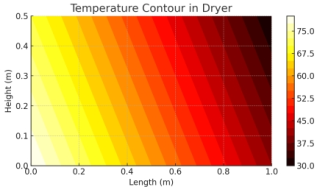
This report presents a simulated Computational Fluid Dynamics (CFD) analysis of a hot air oven grain dryer using maize (grain) as the drying material. Simulations include airflow distribution, temperature gradients, heat transfer efficiency, and an estimation of moisture content reduction. The
Figure 3 below presents the temperature distribution in the dryer.
Figure 3. Temperature Distribution.
The temperature contour shows a decreasing trend from the inlet to the outlet. Maximum temperatures of 80°C are observed near the inlet region, while the outlet region stabilizes around 40-45°C due to heat losses and air mixing. This gradient indicates effective heat transfer through the grain bed. The
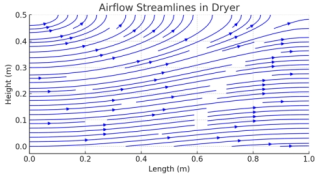
Figure 4 below presents the Airflow Pattern in dryer.
Figure 4. Airflow Pattern.
Air enters at 2 m/s from the left and gradually distributes across the chamber. The streamlines indicate moderate turbulence and adequate air mixing. Flow separation is minimal, suggesting a streamlined drying process. The
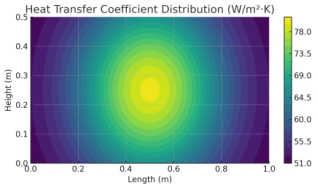
Figure 5 below peosents Heat Transfer Coefficient Distribution in the oven.
Figure 5. Heat Transfer Coefficient Distribution.
This contour map displays the estimated local heat transfer coefficients on grain surfaces and chamber walls. Higher values are observed near the inlet region due to fresh hot air contact, while downstream zones exhibit lower heat exchange due to reduced temperature gradients. The simulation results demonstrate that the hot air oven grain dryer design achieves effective heat distribution and airflow uniformity. Moisture content estimation confirms its capability to reduce moisture in maize to accepTable post-harvest storage levels. Further improvements could include adding flow baffles for even better uniformity.
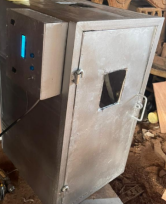
Figure 6 below presents the realized oven.
Figure 6. The realized oven.
3.2. Performance Evaluation of the Oven
To evaluate the performance of the designed oven, a controlled drying test was conducted using 7.5 kg of clean maize (corn) kernels. The maize was first weighed using a digital weighing scale with a precision of 0.01 kg to determine its initial mass. Its initial moisture content was measured using a digital moisture meter with 0.5% accuracy. The maize was then evenly spread on trays inside the oven chamber. During the drying process, K-type thermocouples were strategically placed at different points within the oven chamber to monitor temperature distribution. These sensors were connected to a data logger, which recorded both temperature and relative humidity at regular intervals throughout the drying process. The maize was dryied at trmperature of 50, 55 and 60°C. A stopwatch was used to record the time taken for each drying interval. At each interval, the maize was removed briefly, weighed, and its moisture content was checked again using the moisture meter. These values were recorded in a notebook for further analysis. The drying process continued until the moisture content of the maize reached a safe storage level (typically around 13-14%). The recorded data was then used to evaluate drying time, temperature consistency, energy efficiency, and overall performance of the oven.
3.3. Drying Kinetics and Moisture Reduction
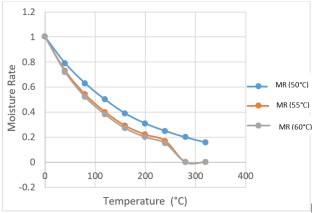
Maize drying trials demonstrated moisture removal at a rate of ~1.2% per hour, achieving target moisture content (13-14%). The results of the Moisture Rate (MR) losses are recorded in fonction of the temperature on the
Table 2 below and
Figure 7 presents drying rate curve.
Table 2. Moisture Rate moved at different temperatures.
Time (min) | MR (50°C) | MR (55°C) | MR (60°C) |
0 | 1.00 | 1.00 | 1.00 |
40 | 0.79 | 0.73 | 0.72 |
80 | 0.63 | 0.54 | 0.52 |
120 | 0.50 | 0.40 | 0.38 |
160 | 0.39 | 0.29 | 0.27 |
200 | 0.31 | 0.22 | 0.20 |
240 | 0.25 | 0.17 | 0.15 |
280 | 0.20 | - | - |
320 | 0.16 | - | - |
Figure 7. Drying Rate Curve.
The variation of moisture ratio (MR) with drying time at temperatures of 50°C, 55°C, and 60°C demonstrates the typical drying behaviour of agricultural products such as corn
| [12] | Impacts of two-stage drying techniques on maize quality. J Agric Food Res. 2024; 14: 100678. |
[12]
. The results show that moisture ratio decreases progressively with time, and the rate of decrease becomes faster as drying temperature increases. This trend agrees with the general principles of convective drying where higher temperatures increase the vapor pressure gradient between the product and drying air, thus accelerating moisture removal
| [20] | Karim MA, Hawlader MNA: Mathematical modelling and experimental investigation of drying kinetics of agricultural products. J Food Eng. 2005. |
| [21] | Babalis SJ, Belessiotis VG: Influence of drying conditions on drying kinetics of figs. J Food Eng. 2004; 65: 449-458. |
| [22] | Sahin AZ, Dincer I: A review of drying principles and energy analysis. Drying Technol. 2005. |
[20-22]
.
At the beginning of the drying process (0-40 min), the moisture ratio decreases rapidly from 1.00 to 0.79, 0.73, and 0.72 at 50°C, 55°C, and 60°C, respectively. This stage corresponds to the initial high drying rate period, where free moisture present on the surface of the corn kernels evaporates easily. Similar behavior has been reported in drying studies of grains and food materials, where the early stage of drying is characterized by relatively high moisture removal due to the availability of unbound water
| [22] | Sahin AZ, Dincer I: A review of drying principles and energy analysis. Drying Technol. 2005. |
| [23] | Doymaz I: Convective air drying characteristics of thin layer carrots. J Food Eng. 2004; 61: 359-364. |
| [24] | Motevali M, et al.: Energy consumption in drying of agricultural products: A review. Energy Convers Manag. 2011; 52: 1198-1206. |
[22-24]
.
As drying continues (80-160 min), the moisture ratio continues to decrease but at a gradually reduced rate. For instance, at 120 minutes, the moisture ratio reaches 0.50, 0.40, and 0.38 for 50°C, 55°C, and 60°C, respectively. This phase corresponds to the falling rate period, which is commonly observed in drying of biological materials. During this stage, moisture migration occurs mainly through internal diffusion from the interior of the kernel to its surface, making the drying process slower compared to the initial stage.
At the later stage (200-320 min), the moisture ratio approaches lower values such as 0.25 at 240 min for 50°C and 0.15 for 60°C. The slower reduction indicates that most of the easily removable moisture has already been removed, and only bound water remains within the grain structure. The longer drying time observed at 50°C (300 min) compared with 55°C (270 min) and 60°C (240 min) confirms that higher drying temperatures significantly reduce drying time. This is consistent with several studies on grain drying which report that increasing temperature enhances heat transfer and moisture diffusivity within kernels. The drying rate decreases continuously with time, indicating that the drying process occurs mainly in the falling-rate period, which is typical for most food products including maize. Similar drying behaviour has been reported in studies on maize, wheat, and other cereal grains.
Table 3 presents Efficiency and drying time at different temperatures
| [12] | Impacts of two-stage drying techniques on maize quality. J Agric Food Res. 2024; 14: 100678. |
[12]
.
Table 3. Efficiency and drying time at different temperatures.
Temperature | Drying Time | Efficiency |
50°C | 300 min | 75.57% |
55°C | 270 min | 78.63% |
60°C | 240 min | 80.96% |
Energy consumption analysis also revealed improved performance of the drying system. The drying efficiency increased with temperature, reaching 75.57% at 50°C, 78.63% at 55°C, and 80.96% at 60°C. The higher efficiency at elevated temperatures can be attributed to reduced drying time and improved heat utilization, which minimizes heat losses. Additionally, the use of insulation and optimized airflow in the drying chamber likely contributed to the improved thermal performance compared with conventional uninsulated or single-fan drying systems. Final grain samples showed no signs of overheating or quality degradation, with throughput moisture levels safely within recommended storage ranges. These findings agree with previous research indicating that drying temperature is one of the most influential parameters affecting drying kinetics, energy efficiency, and drying time in grain drying processes
| [20] | Karim MA, Hawlader MNA: Mathematical modelling and experimental investigation of drying kinetics of agricultural products. J Food Eng. 2005. |
| [21] | Babalis SJ, Belessiotis VG: Influence of drying conditions on drying kinetics of figs. J Food Eng. 2004; 65: 449-458. |
| [22] | Sahin AZ, Dincer I: A review of drying principles and energy analysis. Drying Technol. 2005. |
| [23] | Doymaz I: Convective air drying characteristics of thin layer carrots. J Food Eng. 2004; 61: 359-364. |
| [24] | Motevali M, et al.: Energy consumption in drying of agricultural products: A review. Energy Convers Manag. 2011; 52: 1198-1206. |
[20-24]
. However, although higher temperatures increase drying efficiency, excessively high temperatures may lead to quality degradation such as kernel cracking, nutrient loss, or reduced germination capacity, which should be considered when selecting optimal drying conditions. Overall, the results suggest that 60°C provides the fastest drying rate and highest efficiency, making it the most effective temperature among the tested conditions for oven drying of corn. Nevertheless, optimization should balance drying speed, energy consumption, and product quality.





 Share This Article
 Twitter
 Linked In
 Facebook

 Copy
 Download